
DOJ Hiding Truth Under Accusations
When you don't have a leg to stand on, start deflecting and making accusations of others. It's a manipulation tactic and the MAGA faithful are falling for it. Some democrats are conspicuously silent.
NEITHER PARTY
2/14/20267 min read
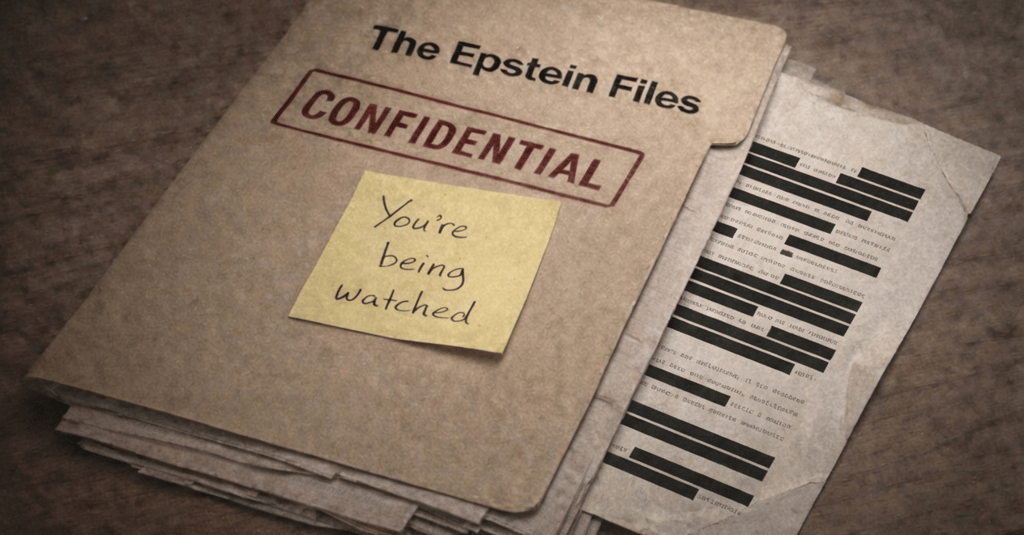
What is the DOJ hiding?
Something unusual happened this week in Washington: Democrats and Republicans agreed on something.
Attorney General Pam Bondi walked into a House Judiciary Committee hearing carrying a binder. Inside was a document labeled "Jayapal Pramila Search History." It showed exactly which Epstein files the Washington Democrat had searched the day before: what she opened; what she looked at; all of it logged by the Department of Justice.
The room erupted on both sides of the aisle.
"It is totally inappropriate and against the separations of powers for the DOJ to surveil us as we search the Epstein files," Rep. Jayapal said. Rep. Nancy Mace, a Republican who's been pushing hard for Epstein file transparency, said that the physical tagging made it feel “disturbing and intimidating,” and that the DOJ should have disclosed it. Even Speaker Mike Johnson, usually aligned with the administration, called it inappropriate.
The DOJ recently released over 3 million pages of documents related to Jeffrey Epstein's crimes. They invited members of Congress to view less-redacted versions, but only on DOJ computers at a Justice Department building. Lawmakers had to leave their phones outside. No staff allowed. Four computers. DOJ software. And apparently, the DOJ logged every single search.
The department says they're tracking searches "to protect against the release of victim information," which sounds reasonable because protecting victims matters.
But then Bondi walked into a congressional hearing with a lawmaker's search history printed out and used it to launch a partisan attack. Rep. Jayapal had viewed files on Tuesday morning. Twenty-three hours later, the DOJ had pulled her search history and prepared the Attorney General to weaponize it against her in a hearing.
Worth noting: despite its name, the Department of Justice isn't part of the judicial branch. It's part of the executive branch. And Attorney General Pam Bondi serves at the pleasure of the president. So when the DOJ tracks congressional searches and Bondi shows up with that information to attack lawmakers investigating the executive branch, we're watching the executive branch monitor and intimidate congressional oversight in real time.
Furthermore, Jayapal isn't just any member of Congress. She's the Ranking Member of the Subcommittee on Immigration Integrity, Security, and Enforcement. She's been vocal in her criticism of the administration's immigration policies and has actively worked to limit executive power in ICE activities. That the Attorney General showed up with her search history in hand, ready to use it as ammunition is not a coincidence.
The Question Nobody's Asking
Three million pages. Thousands of names. People with power. People with wealth. People from both parties. And instead of talking about who's in those files, we're talking about who's searching them and what are they searching for.
Some people are speculating that lawmakers are looking for their own names because they're worried about being implicated. Others suggest they're looking at salacious images. The internet has theories. Accusations. Judgments.
Consider for a moment: If we were lawmakers or public figures with access to files that might contain our names, wouldn't we want to know if a storm was coming? Even if we'd never met Epstein. Even if we'd done nothing wrong. Wouldn't we want to see what was there?
It's human nature to want to know what is said about us. And we'd be particularly curious about an FBI dossier involving our employer or our community. It doesn't take a stretch of the imagination to consider that for one moment.
The cliche on privacy comes to mind. "If you have nothing to hide, you have nothing to fear." It's the same logic that justified mass surveillance programs. The same reasoning that led to the dystopian future George Orwell wrote about in 1984. If we didn't like that argument when it was used to justify warrantless wiretapping, then we shouldn't like it now.
The Constitution actually addresses this. The Speech or Debate Clause protects members of Congress from being "questioned in any other Place" for their legislative activities. Oversight is a core legislative function. It's how Congress is supposed to check executive branch power. The Supreme Court has said congressional investigations "plainly fall" within this protection.
The clause exists for a reason. It's designed to prevent exactly this: the executive branch monitoring, tracking, and potentially intimidating legislators as they perform their constitutional duties. When Congress investigates, they need to be free from executive surveillance. That's not just a privilege for lawmakers. It's a protection for the separation of powers that benefits all of us.
The Deflection Pattern
Watch how this plays out. The Justice Department releases files, but heavily redacted. Members of both parties complain that too much is still hidden. They push for more transparency. So the DOJ allows them to view less-redacted versions, but only under conditions that let the department monitor everything they do.
Then, when oversight gets uncomfortable, the Attorney General shows up with threats of exposure. She seems to care less about what's in the files than about who's looking at what. And as a result of this bombshell, the conversation shifts. We're no longer asking why so many powerful people had close ties to Epstein, including the current president. We're arguing about whether lawmakers have the right to conduct oversight without being spied on.
Meanwhile, the files that millions of Americans want to see, the ones that might actually answer questions about a trafficking ring that operated for years with apparent impunity, remain largely hidden behind black bars.
We keep seeing this happen. When there's something people don't want us looking at, the conversation gets redirected. We end up fighting about insignificant details, about who's searching what, about anything except the actual substance.
And here's the trick. People are suspicious that these lawmakers are upset because their search history showed up at a congressional hearing. We naturally want to know why. Filling in the blanks with stories that support what we already believe is exactly what Bondi wants from Trump's base: "they're guilty"; "they're hiding something"; "they're the bad ones, not our side". The seeds get planted, baseless accusations grow, and before we know it, we're the ones giving away our privacy rights to punish people we don't like. We're harming ourselves.
Meanwhile, what makes this a perfect issue for Neither Party? The Epstein files contain names from both sides. Democrats and Republicans. Celebrities and politicians. People with power who don't want scrutiny. Both parties have reasons to be uncomfortable with full transparency. Both have people who'd rather we fight about surveillance than look at what's actually in those files.
What Both Sides Get Wrong
Some Trump supporters are treating this as vindication. "See? The lawmakers searching these files must be guilty. They're looking for their own names." This assumes guilt based on outrage, which is exactly the kind of thinking that erodes privacy for everyone.
Some on the left are treating this purely as an abuse of power by the current administration. And yes, the DOJ tracking congressional oversight is an abuse of power. But the previous administration wasn't exactly transparent with these files either. The 2024 Epstein Files Transparency Act passed with bipartisan support because Americans across the political spectrum demanded it. The resistance to full disclosure came from both sides.
Both reactions miss the bigger picture. This isn't about whether Democrats or Republicans are more corrupt. It's about a system that protects the powerful from accountability. Democrats and Republicans are both complicit in this! It's refreshing to see that some of them are doing something about it and now Bondi and her DOJ are attacking those that want accountability and justice.
Separation of Powers Isn't Optional
The Constitution set up three branches of government specifically so they could check each other. Congress investigates. The judiciary interprets. The executive branch implements. When one branch starts surveilling another as it performs its constitutional duties, the whole system breaks down.
This matters whether we're Democrats who voted for transparency or Republicans sick of cover-ups. It matters regardless of which administration we trust or despise. The precedent being set here doesn't just apply to the people in power today. It applies to whoever comes next.
We're watching a cover-up of epic proportions, but we're too easily distracted. We chase the next shiny ball that they dangle in front of our eyes.
If the Justice Department can track lawmakers as they conduct their oversight, compile their search histories, and use that information to attack them in hearings, what happens to effective congressional oversight? What lawmaker is going to aggressively investigate executive branch wrongdoing if they know they're being monitored with a frivolous case built against them?
The Real Question
Rather than asking "what are lawmakers searching for?" we must continue to ask "who is in those files and what did they do?"
Why is so much still hidden from the American people who demanded transparency? Does executive branch surveillance of congressional oversight violate the constitutional separation of powers?
And maybe the biggest: when both Democrats and Republicans are raising the same concerns about executive overreach, when we see a rare moment of bipartisan agreement that something is wrong, why are we letting the conversation get redirected to speculation about motives instead of focusing on what they're all pointing at?
Three million pages. Thousands of names. A trafficking operation that went on for years. Victims who deserve justice. And the people who enabled it all, still largely protected by redactions.
That's the story and everything else is deflection.
Where We Stand
Neither Party exists because we're tired of choosing between two bad options in a system that serves the powerful over the people. This is exactly the kind of issue that proves why.
Watch how the partisan responses line up. Some will defend the DOJ's surveillance because it's their team in power. Others will attack it because it's not. Change which party controls the executive branch and those positions flip.
When both Democrats and Republicans point at the same problem, and we find ourselves debating their motives instead of looking at what they're pointing at, that tells us how well the deflection is working.
The files are there. Millions of pages documenting years of trafficking. Names of people who enabled it, participated in it, or ignored what they knew and did nothing. And instead of demanding that the guilty be held accountable, we're arguing about who's looking at what and why.
Enter your NAME & email to stay informed and participate in this growing movement
© 2025. All rights reserved.