
A Chilling Effect
A playbook for controlling media coverage of protests
NEITHER PARTY
2/14/20266 min read
Who Decides What Constitutes Justice?
"What the U.S. Attorney requested is unheard of in our district."
That's Chief Judge Patrick J. Schiltz of the U.S. District Court for Minnesota. A federal judge describing what the Department of Justice tried to do in late January.
He surveyed every judge in his district. None of them could remember the government ever asking a district judge to override a magistrate judge's denial of an arrest warrant; not once in four decades.
And yet here we are.
What Actually Happened
On January 18, Black Lives Matter Minnesota organized a protest at Cities Church in St. Paul. They were there because one of the church's pastors, David Easterwood, is also the ICE field director for St. Paul. That morning, several dozen people gathered at a grocery store parking lot where organizers briefed them on the plan. Then they went to the church.
The protesters chanted "Justice for Renee Good" and "ICE out" for about five minutes, then left.
Two journalists were there filming. Don Lemon and Georgia Fort. Both working as independent journalists. Both repeatedly stating on camera that they were there to document the protest, not participate in it.
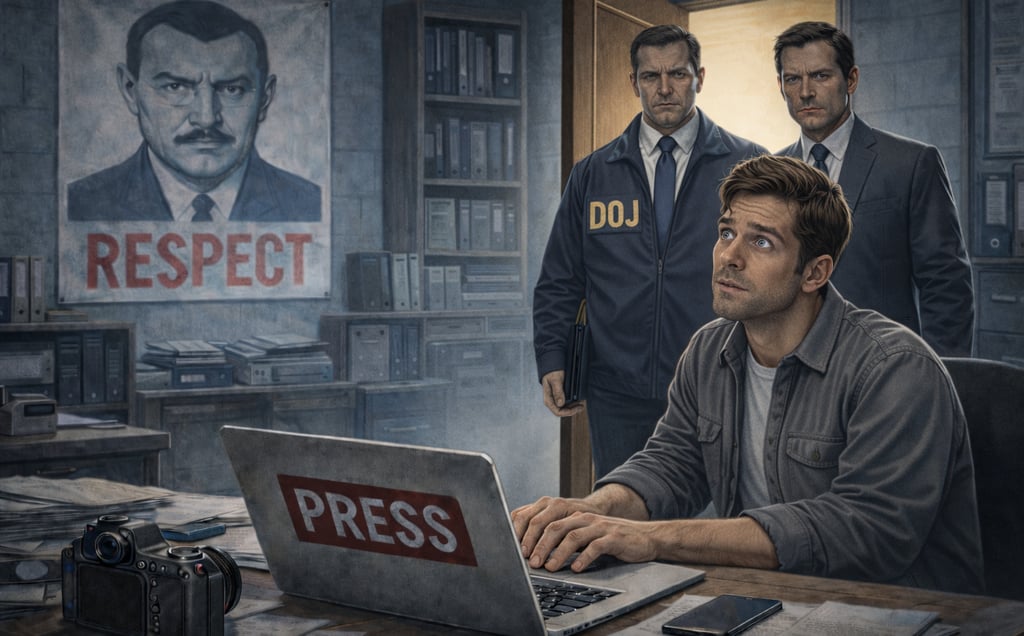
On January 30, the journalists were arrested and charged with conspiracy to interfere with the exercise of religious freedom at a place of worship.
The law used to justify their arrest was The Freedom of Access to Clinic Entrances Act (FACE), which was created in 1994 to prevent and prosecute violence and physical obstruction; primarily protecting abortion clinics from bombers and violent protesters. It has two parts: one protects people accessing reproductive health services, the other protects people exercising religious freedom at places of worship.
Media law experts say this is the first time the FACE Act has ever been used against journalists.
The Timeline Following the Disruption at the Church
January 22: U.S. Magistrate Judge Douglas Micko reviews arrest warrants for eight people involved in the protest. He signs warrants for three protesters. He refuses to sign warrants for Lemon, Fort, and three others, noting: "No probable cause."
January 22-23: The DOJ asks Chief Judge Schiltz to override Micko's decision. Schiltz writes: "Two of the five protestors were not protestors at all; instead, they were a journalist and his producer. There is no evidence that those two engaged in any criminal behavior or conspired to do so." He states that what the government is requesting is unprecedented in the district.
January 23: DOJ goes to the 8th Circuit Court of Appeals, asking them to force the lower court to sign the warrants. The appeals court says no.
January 29: DOJ empanels a grand jury.
January 30: Grand jury returns an indictment. Lemon is arrested the same day while covering the Grammy Awards in Los Angeles. Fort is arrested in Minnesota.
Three days. From rejected warrants to arrests.
What is a Grand Jury?
This is important to understand because a lot of us hear "grand jury" and think it means the same thing as a trial jury. It doesn't.
A trial jury hears both sides present evidence, allows defense attorneys to cross-examine witnesses, requires proof beyond a reasonable doubt, and is accessable by the press and the public. A grand jury only hears prosecutors, allows no defense participation, requires only probable cause to indict, and meets in secret. Defendants and their attornies are prohibited from being present.
A famous legal saying states that "A grand jury would indict a ham sandwich." It exists because grand juries are fundamentally one-sided.
When three federal judges question charges and the DOJ goes to a grand jury instead, they're going to the one place where the defense can't participate. The grand jury indictment means Lemon and Fort are now formally charged and will face trial, but that trial is likely months away. Long after this press cycle is over.
What The DOJ Says Happened
According to the indictment, here's what prosecutors told the grand jury:
Lemon attended the planning meeting that morning at the grocery store parking lot
He livestreamed from the meeting and told his audience he was with a group for a "resistance" operation
He reminded people not to disclose the target location
Inside the church, Lemon and two others "largely surrounded" Pastor Easterwood
Lemon stood near the main door and "confronted some congregants and physically obstructed them" as they tried to leave
This, prosecutors argue, makes him part of a conspiracy to interfere with religious freedom.
What The Journalists Say
Lemon's own footage shows him saying "We're not part of the activists, we're just reporting on them." He and Fort maintain they were there as journalists documenting a newsworthy protest. Video footage and independent investigations show no evidence of surrounding the Pastor or obstructing the congregants.
So here's the scenario: A journalist attends a planning meeting for a protest. He films it. He knows what's going to happen and where. He shows up with a camera. The protest lasts five minutes. Is that journalist complicit in a conspiracy?
Pam Bondi's DOJ says yes. Legal experts say journalists have never been charged this way before.
Think about what that means. If attending a planning meeting and knowing about a protest makes you a co-conspirator, how can journalists ever feel safe covering protests? If protecting your sources' operational security means you're maintaining secrecy for a conspiracy, then every investigative journalist who's ever said "I can't reveal my sources" becomes a criminal.
The DOJ says Lemon obstructed congregants trying to leave. Lemon says he was filming. We don't know yet what evidence will show at trial. But the question remains: Should filming a protest - even if you're standing in a doorway getting footage - turn journalism into criminals?
The Religious Freedom Question
The FACE Act's religious freedom provision is real and important. People have the right to worship without intimidation or violence. The law was designed to prevent and prosecute violence and physical obstruction at places of worship.
Did the protest violate that right? That's a legitimate legal question. Magistrate Judge Micko found probable cause to charge three protesters, but not the journalists. So the question isn't whether the law applies. The question is whether it applies to journalists covering these events.
Whether the protesters broke the law is a separate question from whether the journalists covering it are criminals. The DOJ is arguing that they are not separate: that journalists are treated the same as protestors.
Here Are Some Things Worth Noting
Three federal judges questioned these charges. The DOJ went around them to a grand jury where the defense can't participate.
The indictment came down on Friday. Lemon was arrested Saturday at the Grammys: a high-profile, heavily photographed event where his arrest would be immediately visible.
Attorney General Pam Bondi promoted the arrests on social media. The White House posted a joke mocking the arrested journalist: "When life gives you lemons..."
Media law professors who've studied press freedom for decades say they've never seen the FACE Act used this way.
And here's one more thing to notice: This all started because protesters were demanding accountability for the death of Renee Good, a U.S. citizen killed by an ICE agent during an enforcement operation. The shooting is still under investigation. The journalists were covering protests about that shooting. It took less time to indict a journalist than the ICE agent who killed an American civilian.
Notice where the focus shifted.
Why Should I Care?
This isn't about whether Don Lemon is annoying or biased or whatever anyone thinks of him as a person. This isn't about whether we like Black Lives Matter or have concerns about how protests are organized. This isn't about our feelings towards ICE agents or activists.
This is about a simple question: Should the government be able to arrest journalists for covering protests?
Because if the answer is yes, we don't have a free press. We have a press that only covers what the government allows under threat of imprisonment or worse.
A Chilling Effect
Whether intentional or not, the effect is there: other journalists will have to weigh the risks of covering protests about federal law enforcement. Because covering a protest might make you part of it. That's called "a chilling effect". And it works regardless of whether anyone intended it to work.
When the government can turn journalists into conspirators we've crossed a line that's hard to walk back. Three judges saw this and said no. The government found a way to do it anyway.
The trial will happen eventually. Both sides will present their evidence. A jury will decide. That's how the system is supposed to work. But by then, this news cycle will be long over. The spectacle of the arrest is happening now. The actual legal proceeding happens later, quietly, after the general public has forgotten.
Is this justice or political theater?
The pattern is there for anyone willing to see it.
Today it's journalists we might not like covering causes we might not support. Tomorrow it could be the journalists we do support. The causes we care about. The same playbook used against US!
Enter your NAME & email to stay informed and participate in this growing movement
© 2025. All rights reserved.